Key Industries Driving Nigeria’s Growth Right Now
Nigeria is an active member of the economic community on the African and global stage, a position it has built over the years through its large population, rich natural resources, and developing business environment. Among the many issues that Nigeria’s economy has been known for, oil, although still important, has in recent years taken a back seat to a more complex and dynamic picture.
Many present-day growth drivers in the Nigerian economy, which were not as prominent before, are now very much part of the present and also in the process of transformation. From agribusiness to tech-based companies, we see a large-scale shift in which once underperforming or non-existent sectors are now key players. In these, we also see job creation on a large scale and a restructuring of how the economy functions. In this, we also see where we are at present and where we are heading.
Overview of Nigeria’s Economic Landscape
Nigeria has a wide and complex economy which includes both traditional and emerging sectors. In the past, oil and gas were the main drivers of government revenue and export earnings. But with volatile global oil prices and issues of economic stability, the country is now on a diversification path.
Today, in many fields, we see economic activity. Agriculture, which employs a large number of people, and telecommunications and finance, which are growing rapidly, are all active. Industry, trade, and the creative sector are also on the rise. We are seeing a more diverse economy that is becoming more resistant to shocks and more adaptable.
Key Industries Driving Growth
Oil and Gas
The oil and gas industry is still at the core of Nigeria’s economy. It remains the main source of export revenue and also funds a large part of government spending. Crude oil production and natural gas exports have positioned Nigeria as a key energy player.
Despite efforts toward diversification, oil and gas still play a major role in foreign exchange earnings and fiscal policy. However, there is a growing focus on efficiency, reduced dependency, and increased investment in refining and petrochemicals. The long-term goal is to extract more value from the sector while reducing exposure to external shocks.
Agriculture
Agriculture is the backbone of the Nigerian economy. It is key to food production, employment, and rural development. Large sections of the population rely on farming, fishing, and animal husbandry.
A wide variety of crops are produced, including cassava, rice, maize, and cocoa. In recent years, there has been a shift toward modern agricultural practices, improved storage systems, and expanded value chains. Agribusiness is also growing, attracting young entrepreneurs into processing, packaging, and export of agricultural products.
Agriculture plays a major role in food security and also presents a significant export opportunity if properly developed.
Technology and Digital Economy
In a major development for Nigeria’s economy, the tech sector has grown at an unprecedented rate. The country has become a hub for start-ups, particularly in financial technology, e-commerce, and digital services.
Young Nigerians are at the forefront of this change, driving innovation in everyday problem-solving. We see rapid growth in mobile apps, online platforms, and digital payment systems, which have improved access to services for millions of people.
The tech sector is also attracting investment and global attention. It is contributing to job creation, innovation, and Nigeria’s presence in the global digital economy. As internet access improves, its impact is expected to grow even further.
Manufacturing
Manufacturing is an important sector that supports economic growth by promoting local production and reducing import dependence. It includes food processing, textiles, cement, and consumer goods.
The sector contributes to industrialization and job creation while strengthening supply chains across the economy.
However, it faces challenges such as high production costs, unreliable power supply, and limited infrastructure. Despite this, there is strong growth potential supported by efforts to improve the business environment and encourage local production.
Telecommunications
The telecommunications industry has experienced rapid growth over the past two decades. Mobile phone adoption and internet usage have transformed communication and access to information.
Telecoms are central to connecting people, businesses, and markets, and they support key sectors such as technology, finance, and commerce.
With expanding broadband and digital infrastructure, the sector continues to drive innovation and economic activity. It is now a key part of modern life in Nigeria, including online learning and digital banking.
Creative Industry (Entertainment and Media)
Nigeria’s creative sector is a global success story, particularly in film and music. The film industry produces large volumes annually, while the music industry has become internationally influential.
This sector goes beyond entertainment; it is a growing economic force that provides jobs for actors, musicians, producers, writers, and content creators.
Streaming platforms and social media have expanded the reach of Nigerian content, creating new revenue streams and international opportunities. The creative industry also plays an important role in shaping cultural identity and projecting Nigeria globally.
Trade and Commerce
Trade forms the base of daily economic activity in Nigeria. From large-scale import and export to small local markets, buying and selling is central to the economy.
Small and medium-scale enterprises play a key role in job creation and stability. Many Nigerians rely on small businesses in retail, wholesale, and services.
Digital markets are also expanding, allowing businesses to reach customers beyond their immediate locations.
Emerging Industries to Watch
Nigeria’s emerging sectors are gaining momentum. Renewable energy, especially solar power, is growing rapidly in both urban and rural areas.
E-commerce is also expanding as more consumers move online and businesses adopt digital platforms.
Logistics and transport are increasingly important as efficient movement of goods supports trade, manufacturing, and e-commerce growth.
Challenges Facing These Industries
Despite progress, key challenges remain. Infrastructure issues such as poor power supply and weak transport systems increase business costs.
Policy inconsistency can discourage investment and entrepreneurship. Stable and transparent policies are essential for long-term growth.
Access to finance remains difficult for many small businesses and start-ups.
Global factors such as commodity price fluctuations and international trade conditions also affect Nigeria’s economy, highlighting the need for strategic planning and strong governance.
Future Outlook
Nigeria has strong potential for continued growth and diversification. A young population, expanding industries, and rising innovation provide a solid foundation.
Investment in infrastructure, education, and technology will be critical. Supporting local industries and encouraging entrepreneurship will also drive sustainable development.
As sectors become more interconnected, the economy is expected to become more resilient and less dependent on any single industry.
Conclusion
Nigeria’s economy is made up of diverse and evolving sectors. While oil and gas remain important, agriculture, technology, manufacturing, telecommunications, and the creative industry are increasingly shaping economic growth.
Trade and commerce continue to support daily economic activity, while emerging sectors such as renewable energy and e-commerce offer new opportunities. Despite ongoing challenges, the overall direction is one of growth and transformation.
With the right policies, investments, and innovation, Nigeria is positioned to build a more robust and diversified economy in the years ahead.
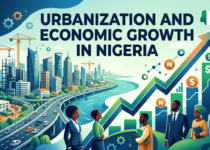
Urbanization and Economic Growth in Nigeria
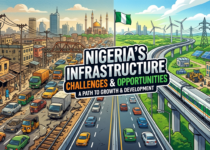
Nigeria’s Infrastructure Challenges and Opportunities