Government and the Economy: What is it that they do?
Introduction: Why Government Matters in the Economy
The government’s role in the economy is very present, although many only notice it when things go south. At price increases, job diminution, or business struggle, we see a rush to judge what the government is or is not doing. But outside of crisis times, the government is very much a background force in the everyday functioning of the economy. Its influence is in the laws, policies, public services, and the overall environment in which we work and do business.
Government as an Economic Regulator
At its root, the government functions as a regulator. It puts in place the rules which guide economic activity, which in turn make sure that businesses play by certain rules and that individuals are protected from unfair practices. Without these rules, markets would break down into chaos, with the powerful preying on the weak. Regulations play a role in maintaining order by setting standards for safety, competition, and fair play. For instance, we have rules around product quality, which see to it that what is put out to the public meets certain standards, and we have labor laws, which are put in to improve working conditions.
Providing Public Goods and Essential Services
Another key role for government is in the area of public goods and services. Where private individuals and companies do not do well, we see the state step in. We have infrastructure like roads, bridges, and public transit, which facilitate the movement of products and people; thus, we have better trade and daily operations. Also, we have our education systems, which put into the hands of individuals the information and skills they need to be part of the economic structure. At the same time, we have public security, which puts in place the stability that businesses require to grow without interruption.
Promoting Economic Stability
The government also is a player in the area of economic stability. We see that economies are in a constant state of change between growth and slowdown, and at those times, government action will play a role in which direction and to what extent that change takes place. Via policies which touch on spending and tax issues, authorities may put out pro-growth measures or try to slow growth which has gone too far. While these actions are put under the microscope, they do so in an effort to reduce large-scale fluctuations and to instead foster a more stable economic environment.
The Role of Taxation in the Economy
Taxation is a very present aspect of government activity in the economy. We see taxes as the source of revenue, which in turn finance public services and projects. Also, at the same time, tax structure plays a role in behavior. For example, some tax policies may promote investment in certain sectors, or they may deter what is seen as negative activity. The issue is to achieve a balance between what is collected in revenue and, at the same time, not placing too great a burden on individuals and businesses.
Government Spending and Economic Growth
Government is an equal player in this. When the government puts money into infrastructure, education, or public programs, that is putting cash into the economy. This can open up job growth, support young industries, and improve productivity. But how and where that money is spent is very important. Well-planned spending may lead to great long-term benefits; poor decisions may result in waste or very little to show for it.
Encouraging Fair Competition
In reports of the government’s role beyond that of direct spending, we see that it serves as a referee in the market. It enforces competition laws, which in turn break up monopolies and do not allow a single company to take over a whole industry, which may not be fair. This, in turn, supports healthy competition, stimulating innovation, improving product quality, and, in many cases, resulting in better prices for the consumer. Without this watchful eye, large players may operate in a field which is unfair and may restrict choice or set prices beyond what is fair.
Protecting the Economy from External Shocks
The government also plays a role in protecting the economy from external shocks. Global events, for instance, such as changes in international markets or political conflicts, do play a role in domestic economies. Governments react by changing policies, entering into trade agreements, or putting in place measures to mitigate the impact. Although they may not be able to control all global issues which arise, what they do can reduce vulnerability and also support recovery.
Government and Employment Creation
In many areas, we see the hand of the government in employment. Although the private sector does the bulk of job creation, what we do see is that government policy sets the stage for that growth. This includes investment in education and training, support for key industries, and the development of an environment that is business-friendly. Also, in some cases, the government is a large-scale employer, which we see in public service sectors like education, security, and administration.
Social Welfare and Economic Inclusion
Social welfare programs are also included in what the government does in terms of the economy. What these do is provide help to people who may not be able to fully take part in the economy for various reasons. By offering a social safety net created by the government, people are able to have at least a base level of care for themselves, and the gap between the rich and the poor is reduced. In this also comes a greater level of social stability, as well as more people in the pool who are engaged in economic life.
The Debate Over Government Intervention
In many areas of economic policy, we see great debate over the role of government. Some put forth that less interference from the state allows for more efficient operation of the market through supply and demand. Others present the argument that without enough regulatory oversight, inequalities grow and basic services may not reach all. In fact, most economies operate between these two extremes, with governments taking on a variable degree of intervention which is situation-dependent.
The Impact of Corruption and Inefficiency
Corruption and inefficiency play a role in diminishing what government is able to do for the economy. When we see resources going to waste or decisions made for personal gain instead of the greater good, the government’s value is minimized. This results in poor infrastructure, weak institutions, and low growth. Therefore, transparency and accountability measures must be put in place to ensure that what the government does is for the betterment of the public.
Government, Technology, and Globalisation
Technology and the process of globalization have put forth new issues for governments. As economies become more integrated, what happens in one country does not stay there; it affects others as well. In this world, which is more globalized than ever before, governments are required to deal with very complex relationships that play out in the areas of trade, the digital economy, and international cooperation. At the same time, technology has brought forward new policy issues that are also large in scale, such as online business and data security.
Government Policies and Business Growth
Small and large companies are affected by government policies. We see in regulations, taxes, and support programs a mixed bag for small businesses; some present growth opportunities, others do not. In a supportive environment, we see a boost for entrepreneurship, which in turn breeds innovation and job growth. At the same time, overregulation can put a brake on new businesses’ growth and, as a whole, reduce economic vibrancy.
How Government Policies Affect Everyday Life
In the individual’s day-to-day life, the role of the government in the economy is present, even if at times not recognized. We travel on roads, send our kids to school, and enjoy safe neighborhoods, all of which are results of government action. Also, the price of goods, wage levels, and job availability are, in large part, determined by policy and regulation.
Government’s Lasting Influence on the Economy
In that which makes up large parts of the economy that the government does not fully control, it does, however, provide the structure in which economic action takes place. It sets the stage, puts in the rules, and gets involved when needed to steer the system in a better direction or fix it. Also, the quality of this role plays out based on the design and implementation of policies, as well as the degree to which the public trusts the government.
The government plays a key role in the economic issues which people face daily.

The Rise of Online Work Platforms
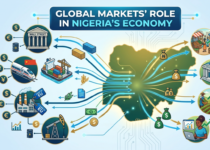
Global Markets’ Role in Nigeria’s Economy.