Global Economic Recovery After Crises
Economic recovery is more than just getting back to pre-panic times. It is a large-scale issue of re-establishing confidence, restoring productivity, creating jobs, and stabilizing financial systems, which we see play out at different speeds for different economies. Some recoveries are quick, some take years, and some may even take decades. The rate and degree of that recovery we see is based on what governments do, how well we do at working together globally, the strength of our institutions, and our ability as a whole, as businesses and as households, to adapt to what is put before us.
Comprehension of economic recovery from crises which we have seen in the past not only clarifies how global events played out but also how it is that countries will put forth different strategies as they face new shocks in our ever more globalized environment.
Understanding Economic Crises
Economic crises present in many forms, which play out in different ways in each economy. Financial crises we see spring from issues within the banking sector, from too much debt, or falling asset prices. In the case of the 2008 global financial crisis, credit markets broke down and economic activity slowed down all around the world.
Health crises like pandemics also cause economic downturns. In the case of large-scale outbreaks, businesses see their doors close, travel drops off, supply chains break down, and consumer spending plummets. Also, the effects spread very fast across borders in today’s connected world.
Geopolitical issues and wars present another type of disruption. They put to waste infrastructure, break up trade routes, raise energy and food prices, and put off investment, which is very much a factor of uncertainty. Also, natural disasters play a role in economic activity by way of destruction of homes, businesses, transport systems, and agricultural products.
Although different in cause, crises tend to see a drop in economic output, weaken labor markets, and see a fall in confidence between businesses and consumers. Growth only starts once we see that things have stabilized.
What Economic Recovery Means
Economic recovery is that time frame in which we see the economy improve out of a downturn. In simple terms, it is the stage when we see growth reappear after a period of decline.
Several measures we use determine recovery. Economic growth is the most key, which includes increased production and income that in turn point to better times. Also important is the level of employment, which in recovering economies we see grow and unemployment fall. We also look at stable prices, which means inflation isn’t a factor, greater consumer outlay, which is to say people are spending more, increased business investment, which is confidence that the economy is on the up, and the health of financial markets, which may be a sign that we are out of the woods.
Recovery is not a linear process in all sectors or groups. We see some sectors come out of crisis fast and some remain in it long after it is over. Also, we find that big players and the well-off fare much better than the vulnerable sections of society and small enterprises.
Key Drivers of Economic Recovery
Government Policy Response
Governments play a large role in economic recovery. In times of crisis, public expenditure goes up in support of households, businesses, and what we may term as key economic sectors. We see fiscal stimulus in the form of direct aid to businesses and individuals, unemployment benefits, tax breaks, or investment into public works.
Infrastructure investment is a key element, which, as it does, puts people back to work and also improves long-term economic productivity. We see in health, energy, transport, and digital improvements the elements which spark demand and, in turn, private investment.
Strong governments can put in place policies which mitigate the extent of downturns and also speed up recovery. But also, it is up to them to put in place support which is both immediate and sustainable in the long term.
Central Bank Actions
Central to recovery periods are the central banks, which at times see to it that interest rates are reduced to encourage borrowing and spending. We see them play a role in lowering borrowing costs, which in turn allows businesses to expand their operations and the average consumer to go out and buy homes, cars, and other goods.
During times of crisis, central banks may also put extra liquidity into the financial systems, which in turn gets banks and businesses to function properly. Monetary easing measures are put in place to restore confidence and to prevent financial instability from spreading through the economy.
In times of uncertainty, these actions are very important, as businesses and households become reluctant to spend or invest.
Business and Consumer Confidence
Confidence is a very present yet powerful force in recovery. We see that companies are more apt to take on new employees and to grow their businesses when they sense the economy is turning around. Also, consumers spend more freely and are more positive about the future when they are in a secure financial position.
Recoveries see growth once the public’s expectation is that we are heading into better times. As confidence grows, we see a cycle play out in which we have more spending, which in turn causes higher production, more hiring, and, in the end, stronger growth.
Global Trade and External Demand
International trade also plays a role in economic recovery. We see that countries which put a large share of their economy into exports do in fact recover faster at the return of global demand. Also, we note that opening trade routes, stabilizing supply chains, and getting industrial production back on track very much puts economic activity in a positive direction.
In today’s connected economic world, recovery in one large region can support growth in other areas. Also, we see that strong demand from international markets is what helps industries get out of destabilizing disruptions.
Stages of Economic Recovery
Recovery does not happen all at once but in stages. In the first stage, we see stabilization. At this time, governments and financial institutions try to avert further economic decline. They put in emergency policies, support financial systems, and restore basic confidence.
In the second stage, growth is gradual. We see businesses reopening, consumer spending slowly returning, and investment also coming back. While employment is improving, we do note that the recovery is still uneven across industries.
In the end, what we see is economic activity returning to pre-crisis trends, financial markets stabilizing, and businesses regaining confidence in future growth. In some cases, economies come out stronger and more innovative than they were before the crisis.
Differences in Recovery Across Countries
Not all countries recover at the same time. What we see is that developed economies have better institutions, larger financial reserves, and also greater access to global capital markets. To that extent, they are able to put in place large support programs during crises.
Emerging economies may see greater issues. Low public finance, weak healthcare systems, and large-scale foreign borrowing put recovery at risk in some of these countries. Also, some countries which very much count on sectors like tourism or commodity exports are at great risk during global downturns.
Institutional health is also a factor. What we see is that countries which have stable governance, sound financial systems, and high public trust do better at bouncing back.
Challenges in Post-Crisis Recovery
Recovery from crises is a tough process. High public debt is a large issue, which we see often when governments borrow extensively to prop up the economy in times of crisis, and they do so at the cost of future growth. Over time, with interest and principal payments and the burden of debt service, that becomes a challenge to growth.
Inflation as well as increasing living costs also play a role during recovery, especially at the same time that supply chains are still disrupted. High prices for basic needs can weaken households’ purchasing power and at the same time put more stress on businesses.
Another issue is that of uneven recovery between sectors. Tech and digital sectors may bounce back quickly, while hospitality, travel, and small businesses may still struggle for longer.
Labour markets are also seeing large changes. In times of crisis, workers may be displaced, which is why retraining is put forward as economies transition to new industries and technologies.
Impact on Businesses and Employment
Crises, in turn, reshape the business environment forever. Some companies do not survive economic disruption periods, while others restructure operations to adapt to change.
At the same time, recovery presents new opportunities. We see expansion of sectors which in turn begin to hire, entrepreneurs identifying gaps in the growing market, and innovation taking off. What we may also see is a shift in employment toward industries which have better long-term growth.
Many areas of recovery see the introduction of new skills that employers look for. Digital literacy, technical expertise, and flexibility have grown to be very important in today’s labor markets.
Innovation and Tech’s Role in Recovery
Technology is at the forefront of what is propelling modern economic recovery. In times of crisis, companies turn to digital solutions to keep going and connect with customers.
Remote work, online commerce, automation, and digital financial services saw great growth in many economies during global disruptions. Also, these innovations enabled businesses to function at a high level despite difficult conditions.
In every crisis, we see the birth of industries which have grown out of society’s need for change. Renewable energy, digital services, health tech, and artificial intelligence are some of the fields that will mark out what these recoveries look like and define the path of long-term growth.
Global Coordination and Cooperation
Economic recovery is rarely an achievement for a country to accomplish on its own. International organizations, development banks, and regional groups play a role in that they provide financial support and technical assistance to economies which are struggling.
Coordinated policy actions can improve trade stability, restore financial confidence, and in turn may prevent long-term global recessions. In the case of developing countries which may not have the resources to recover on their own, cooperation is very important.
Global cooperation also puts forth solutions to issues like supply chain disruptions, debt issues, and financial instability.
Lessons from Past Recoveries
In past recoveries, we saw that resilience and preparation are at a premium. Economies that do best are those that diversify their industries, strengthen their financial systems, and invest in health and infrastructure.
Strong institutions, open governance, and good crisis planning see better results. Countries which put policies in place early and with force tend to see less long-term economic damage.
In many cases, crises speed up structural change. Although disruptions bring about difficulty, they also stimulate innovation, modernization, and new forms of growth.
Future Outlook
Future global recoveries will see increased complexity, which in turn is a result of growing economic interconnectedness. Climate-related disruptions, geopolitical issues, technological change, and evolving labour markets will all play a role in the direction recovery heads.
At the same time, we also see that governments and businesses are putting forward resilience and adaptability as key issues. We are to see large investments in technology, healthcare, education, and sustainable infrastructure into the future.
The world economy will inevitably see tough times, but we also see that the ability to adapt and work together is key for extended stability and growth.
Conclusion
Economic recovery from crises is a step-by-step and at times unequal process which is shaped by policy choices, institutional health, global cooperation, and public confidence. We see that while financial crises, pandemics, wars, and natural disasters may put economies in a very bad state, out of that which is broken comes recovery through coordinated effort, innovation, and resilience.
Although crises leave a lasting mark, recoveries also present chances for change and growth. What we see in the wake of a crisis is the emergence of new industries, different labor patterns, and a greater awareness of the need for preparation.
As we look to the future, which is full of uncertainty, the lessons we learned from past recoveries will be very much applicable. We will see growth out of resilient systems, support for innovation, and also the importance of international cooperation in terms of what forms a stable and adaptive global economy.

The Role of Oil in the Global Market
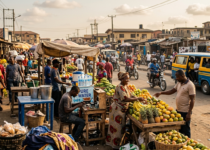
The Informal Economy in Nigeria Explaine