Economic Opportunities in Northern Nigeria
Northern Nigeria is a key player in the economic space of the country, contributing through its large land mass, great population, and wide array of natural and human resources. Stretching over many states that have different climates and cultures, the region has long been known for agriculture, trade, and traditional industries. But beyond its established economic activities, there exists a great deal of untapped economic potential, which is now slowly catching the interest of investors, policy makers, and young entrepreneurs.
In the past few years, it has been discussed that the North is the primary driver of growth beyond oil in Nigeria. From agriculture to solid minerals, renewable energy, and digital innovation, the North offers many options that, if developed properly, could transform its economic future and play a major role in national development.
Overview of Northern Nigeria’s Economy
The economy of Northern Nigeria is a mix of agriculture, trade, and what may be termed the informal sector, with each state in the region playing a role. States like Kano, Kaduna, Katsina, Borno, Sokoto, Bauchi, and others contribute in their own unique way to the region’s productivity. Over the years, the area has been a large-scale producer of food and livestock, which in turn feed local markets as well as our neighbors in West Africa.
Agriculture is the base of the economy, employing millions in farming, herding, and related services. Additionally, large urban centers like Kano and Kaduna are commercial hubs that support manufacturing, trade, and transport. Although we have these strengths, issues remain in infrastructure, industrial growth, and access to modern technology, which in turn limit the region’s full economic growth.
Key Economic Opportunities
Agriculture and Agribusiness
Agriculture is still the mainstay of the economy in Northern Nigeria. The region has large tracts of arable land, and many areas also have a very good climate for both subsistence and commercial-scale farming. Maize, sorghum, millet, rice, groundnuts, and cotton are the primary crops grown, which also present an opportunity for growth into commercial agriculture.
Beyond crop production, which is of great importance, there is also large-scale livestock farming. Cattle, goats, sheep, and poultry are raised, supporting a wide value chain of meat processing, dairy products, leather industries, and animal feed. With the introduction of better storage solutions, irrigation systems, and adoption of modern technology in farming, agribusiness in the North is moving away from mostly subsistence-based practice toward a more industrial and export-oriented sector.
Agro-processing is a very strong opportunity. Instead of shipping out raw products, we should process foodstuffs and agricultural raw materials, which will add value, create jobs, and reduce post-harvest losses.
Solid Minerals and Natural Resources
Northern Nigeria also has great mineral deposits, but many of them are still underdeveloped. In various parts of the area, there is limestone, gypsum, gold, tin, columbite, and coal. These resources present opportunities for mining, processing, and industrial use.
In the right regulatory environment and with the right investment, the solid minerals sector can support the growth of construction, manufacturing, and energy industries. Furthermore, local processing of minerals instead of large-scale export of raw materials would greatly benefit regional industry and create large-scale skilled jobs.
Trade and Cross-Border Commerce
Trade has been at the core of Northern Nigeria’s economic activity for years. The region shares borders with many West African countries, which makes it a natural center for cross-border trade. Geographically, it is a location that sees the movement of a great deal of goods—agricultural products, textiles, livestock, and manufactured items—flowing through regional markets.
Both formal and informal trade channels contribute to economic activities at border areas and in large cities. In terms of intervention, expansion of infrastructure, improved customs processes, and support for small-scale traders would improve trade flows. Additionally, these measures would raise local incomes and at the same time enhance Nigeria’s role in the West African trade system.
Renewable Energy and Power Development
Energy access is a major issue in many parts of Northern Nigeria, including rural areas. However, the region has very high sunlight levels all year round, which presents a great opportunity for solar energy development. Solar power projects can support households, small businesses, schools, and health care facilities, particularly in off-grid areas.
Investment in renewable energy also reduces the use of traditional energy sources and supports growth in agriculture, manufacturing, and services. In small-scale solar and rural electrification projects, there is room for private sector participation and community-based energy solutions.
Manufacturing and Industrialisation
Manufacturing in Northern Nigeria is also a very large growth sector. The region’s history includes textile production, food processing, and leather works, which are very much present in cities like Kano and Kaduna. In the near future, we can see a revival and modernization of these industries, which in turn will create large-scale employment and strengthen local economies.
Light industry, which includes packaging, construction materials, and consumer goods, may see growth with the support of stable power supply, transport infrastructure, and access to finance. Industrial clusters and small and medium-sized enterprises (SMEs) may play a large role in this process by connecting raw material producers with finished goods markets.
ICT and Digital Economy
The digital space is a new frontier for growth in Northern Nigeria. The region has a large youth population that is embracing the digital revolution—from digital entrepreneurship to freelance work and remote opportunities.
Improved access to the internet and digital literacy skills open up options in software development, digital marketing, online education, and e-commerce. In big cities, tech hubs and innovation centers nurture startups and provide training for young people interested in digital fields. This field is also a pathway to economic inclusion for youth and women.
Education and Human Capital Development
Education is at the core of the region’s economic growth. In Northern Nigeria, some progress has been made in getting more people into schools, but large investment is still required, with a focus on the quality of the learning experience and skills development.
Vocational training and technical education programs that introduce practical skills in agriculture, manufacturing, construction, and ICT fields are a solution. By focusing on human capital development, the workforce becomes better prepared for present and future economic challenges and for changes in the market.
Challenges Affecting Economic Growth
In spite of its promise, Northern Nigeria also grapples with many issues that stifle economic growth. Large-scale infrastructure deficits—including bad roads and unreliable power—do not favor business efficiency or market access. Additionally, security issues in some areas dissuade investors and disrupt economic activity.
Access to finance remains a large issue, affecting small-scale businesses and rural entrepreneurs, who are put off from growing by this lack of access to funding. Furthermore, institutional and policy support is sometimes lacking, which deters investment and growth. Resolving these issues is necessary to stimulate sustained growth in the region.
Government and Private Sector Initiatives
In Northern Nigeria, there is increased activity from both government and private sector entities pursuing development efforts. Various agricultural programs, infrastructure projects, and economic empowerment programs have been introduced to support growth in key sectors.
Public and private entities are also entering into more agreements in infrastructure, energy, and industrial development. These partnerships combine public resources with private know-how and investment. Additionally, growing regional integration within West Africa presents great chances for trade expansion and economic cooperation.
Opportunities for Future Growth
In the years to come, Northern Nigeria’s economy will be based on the efficient development of value chains and support for entrepreneurship, rather than only raw material production. The region can become a player in the manufacturing, packaging, and distribution stages of finished products.
Young people are at the vanguard of innovation. With the right support structures in place, young entrepreneurs will play outsized roles in the development of new industries, especially in tech, agriculture, and creative fields. Also key to the equation is improved infrastructure—roads, energy, and digital access—which will expand economic prospects for people in both urban and rural areas.
Future Outlook
In the long term, Northern Nigeria’s economic transformation is a achievable goal, and it is very much achievable if the right elements are put in place. The creation of a supportive environment that fosters innovation, helps small-scale businesses grow, and brings in both local and foreign investment is of great importance.
As improvements in those conditions occur, the region is likely to develop into a more diverse and robust economy, which will benefit Northern Nigeria and at the same time strengthen Nigeria’s overall economic stability and growth.
Conclusion
Northern Nigeria has large economic opportunities in agriculture, minerals, trade, energy, manufacturing, ICT, and education. Issues are present, but they do not outweigh the benefits. Through smart investment, better infrastructure, and development of human resources, the region can fully realize its potential.
Northern Nigeria’s economy will see growth through the transformation of resources into value-added industries and the empowerment of the growing population. If these are properly tapped, long-term prosperity will follow, playing a big role in the greater picture of Nigeria’s economic development.
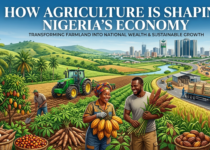
How Agriculture Is Shaping Nigeria’s Economy

How Poor Infrastructure Can Slow Down Economic Growth