The Role of SMES in Nigeria’s economic structure.
Small and medium-scale companies are the lifeblood of many economies, which is also true in the case of Nigeria. In cities, towns, and rural areas, they operate in many sectors, which include retail and agriculture, manufacturing, and digital services. They may start with a small amount of capital and out of an individual’s initiative, but they play a very important role in the makeup of the country’s economy.
In Nigeria, which has a large young population, SMEs are a key driver of growth, employment, and innovation. They fill in gaps that larger companies do not; they also present platforms for entrepreneurship and play a role in the overall economy’s development.
Understanding SMEs in Nigeria
SMEs, which is an acronym for Small and Medium-sized Enterprises, are businesses that, in terms of capital, employee base, and output, are of a small scale. They include businesses that are too big for sole proprietorships but not of the size of large corporations. They range from the local grocery store and tailor shop to medium-sized manufacturers and tech startups.
In Nigeria, the range of SMEs is very wide. In agriculture, we see small-scale farmers and food processors. In commerce, the spectrum includes traders, wholesalers, and retailers in the markets and shops. The service sector is home to businesses like salons, repair services, and logistics providers. Also, recently, in the digital space, we have been seeing growth of SMEs in e-commerce, fintech, and creative industries.
This variety of business models and actions in the economic sphere is proof of the flexibility of SMEs.
Contribution to Employment
In the Nigerian context, SMEs play a key role in job creation. Out of a large population with limited access to formal employment, the growth of the SME sector provides for the livelihood of millions.
These companies also put on staff from the local area, which in turn gives opportunities to both skilled and unskilled workers. From tailoring to jobs in small-scale manufacturing, we see that SMEs play a large role in what is absorbed into the workforce. Also, for young adults that are just starting out in the workforce, many SMEs present entry-level positions, which do not require extensive formal qualifications.
Beyond what is seen in direct employment, SMEs also create indirect jobs. For example, a small food processing business may use farmers for raw materials, transporters for distribution, and vendors for sales.
Through income generation, SMEs play a role in the reduction of poverty and improvement of living standards of many Nigerian families.
Contribution to Economic Growth
SMEs are the engines which drive economic growth through their input in the production of goods and services. Although each business may be small in scale, they produce great impact.
These enterprises, which produce from raw to finished products at a local level, add to the value of what we import and reduce our dependency on imported products. For instance, we see in the case of small-scale manufacturers of clothing, furniture, or packaged food.
Also, SMEs play a role in economic activity via trade and commerce. In Nigeria, small businesses are the main driver of the market, which in turn sees to it that products are put before the consumer.
Their foray into both formal and informal sectors allows SMEs to access markets large companies may have left out.
Role in Innovation and Entrepreneurship
SMEs lead in terms of innovation and entrepreneurship in Nigeria. Because they are of a small size and have more flexibility, they are able to quickly adapt to market changes and try out new ideas.
Many small-scale enterprises put forth innovative solutions to everyday issues we see in payment systems, delivery services, and digital communication, which in turn has played a role in the growth of Nigeria’s startup scene.
SMEs also are a Petri dish for future business leaders. Running a small-scale business brings out skills in management, finance, marketing, and customer relations. As entrepreneurs gain experience, they become better at growing their current business or starting new ones.
This culture of entrepreneurship supports self-reliance.
Impact on Local Communities
At the local level, SMEs play a key role in sustaining their communities. They are part of their nearby environment and provide what the community needs.
In most communities, SMEs play a key role in circulating money. When residents shop at local stores, what comes back is a reinvestment of that income into the community, which in turn supports other businesses and services.
Also, SMEs play a role in social development through job creation. Many families look to small businesses for a living wage.
There is also a role in community development through promotion of local production and reduction of long-distance trade.
Challenges Facing SMEs
Despite the fact that they are very important players in the economy, SMEs in Nigeria report many issues that stifle their growth and sustainability. A key issue is access to finance. Many small-scale business owners have a hard time getting loans, which is a result of strict requirements, high interest rates, or lack of proper collateral.
Infrastructure is an issue in many regions. We have the problem of unstable power, which increases operational costs for businesses that must use generators. Also, underdeveloped road networks and transport systems do not allow for efficient movement of products.
Regulatory and tax issues also play a complex role in business. Small business owners struggle with business registration requirements, compliance issues, and multiple tax systems.
Also, large companies and importers compete against SMEs. They have access to the latest technology and resources, which puts SMEs at a disadvantage.
Opportunities for SMEs
There are many opportunities for SMEs to grow in Nigeria. We see the rise of digital platforms and e-commerce. With growth in internet penetration, small businesses are now able to reach larger audiences, market their products online, and transact business more efficiently.
The consumer base is also growing, which presents great opportunity. In Nigeria, a growing population creates constant demand for products and services.
Support from the public and private sectors is growing. Initiatives provide funding, training, and mentorship, helping entrepreneurs to develop more robust businesses. Also, large companies partner with SMEs, which opens up new markets and supply chains.
These may see SMEs transform into large players in the economy.
Government and Policy Support
The Nigerian government has identified the importance of SMEs and has put in place policies and programs to support their growth. Initiatives aim at improving access to finance, promoting entrepreneurship, and encouraging local production.
However, there is still much to improve. Regulatory processes may be streamlined, infrastructure improved, and policy implementation made more consistent.
Creating a better support system is a result of the work done by government agencies, financial institutions, and private sector players.
Future Outlook
In the years to come, SMEs will take a larger role in Nigeria’s economic future. As the country looks to diversify away from oil, small and medium-sized enterprises present a path to sustainable growth.
In areas of agriculture, manufacturing, technology, and services, they are main agents of economic transformation. With the right support and investment, SMEs may grow to become large, create more jobs, and play a more balanced and resilient role in the economy.
Digital technologies and innovation also open up new markets for SMEs.
Conclusion
SMEs play a vital role in the Nigerian economy. They fuel job creation, contribute to growth, promote innovation, and support local communities. Although they face great challenges, their resilience and ability to adapt keep economic activity going.
As we look to the future in Nigeria, empowering SMEs is key to inclusive and sustainable development. By addressing present issues and taking advantage of upcoming opportunities, these businesses can reach their full growth and bring about a more prosperous economic environment for all.
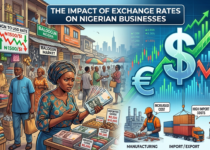
The Impact of Exchange Rates on Nigerian Businesses

How Networking Can Open Global Opportunities