Small Business and Their Role in the Economy.
Small businesses are said to be the foundation of any economy, which is a true statement. Although large companies get the most press and attention from the public, it is the small businesses which, in the background, fuel day-to-day economic activity. They create jobs, and they play a role in the character of our communities. From local shops to small-scale manufacturers and service providers, these enterprises play a key role in the health and balance of the economy.
Small businesses play a key role in job creation. In many countries, we see that a large portion of the labor force is employed by what we may term as medium-scale enterprises. Also, it is the small businesses which provide a platform for which young people, those with a background which may not have been very formal, and those who may be looking for flexible terms of work, enter the workforce. By creating jobs at a local level, small businesses also play a role in reducing unemployment and, in turn, improving the quality of life.
In terms of growth beyond just employment, small businesses also foster entrepreneurship and innovation. We see many of today’s large successful companies as they began as small entities which, at the time, had simple concepts. Also, it is the case that small business owners are very much out there trying new things, putting themselves out there with risky ventures which, in the end, pay off. This is a result of their flexible structure, which large, more formal organizations may lack. What we find is that small businesses become a ground floor for new ideas which may, in the end, develop into full-scale industries or which, in turn, may transform present ones.
Small businesses also play a key role in what they bring to local economies. As opposed to large corporations, which may have a presence in many regions or countries, small businesses are typically found right in their communities. Also, they tend to source from local suppliers, hire from the local labor force, and serve nearby customers. This is to say that money which is spent at a small business tends to stay within the community, which, in turn, supports other local businesses and thus strengthens the economic structure.
Small businesses also play a role in diverse marketplaces. They put forward what is unique in terms of products and services, which, in turn, reflects local tastes, cultures, and needs. This range gives consumers a greater choice and also stops markets from becoming too homogeneous or controlled by large players. For instance, instead of a chain restaurant, a family-run restaurant which has been passing down traditional recipes for generations, or a small fashion brand with a distinct style, these businesses bring to the economy a greater spectrum of what the market has to offer.
Also, in that regard, we see that what small businesses do is very large in scale. Many big companies use smaller firms as suppliers, distributors, or service providers. For instance, a large manufacturer may have many small businesses that supply it with raw materials, packaging, or transport services. This interrelated structure which we see shows that small businesses are, in fact, integral to the larger economy and not separate from it.
Another point which is very true is that small businesses’ great ability is to adapt fast. In times of economic instability or when consumer trends are changing, small-scale companies often outdo large companies. They may change what they are selling, adopt new practices, or go after different markets with less delay. This is also a point that their flexibility at which they operate keeps economic wheels moving during tough times and also adds to the overall economic resilience.
Small businesses also play an important social role which goes beyond what they do for the economy. They tend to develop strong ties with their customers, which, in turn, foster trust and familiarity. A local shop owner may know his repeat customers by name and have a grasp of what they like. That personal touch results in greater customer satisfaction and loyalty, which, in turn, supports the business’ long-term success.
Also, in that they play a role in community development, which is what we see when small businesses get involved in local events, support charitable causes, and improve the neighborhood. They, in turn, foster a feeling of community and responsibility among residents. Also, their presence may encourage other would-be entrepreneurs to start up, which, in the end, produces more economic growth.
Despite their great value, small businesses do put up with a great many issues. Access to resources is limited for them, competition from bigger companies is fierce, and constantly changeable market conditions do them no favors. Also, many small business owners play many roles at once, that of the finance manager, marketer, and customer service representative. These issues require of them resilience, creativity, and strong decision-making skills.
Technology is a double-edged sword for small businesses. On one hand, we see that they use digital tools and online platforms which allow them to reach larger audiences, improve efficiency, and, in turn, compete with bigger companies. At the same time, however, it is also true that they have a hard time with tech changes, which is particularly true of businesses that have limited resources. Those that do manage to adapt to what is happening in the digital space, though, report growth and expansion of their operations.
Another issue of small business impact is that they put into play competition. What we see is that markets are not taken over by a few large players, which, in turn, means high prices and less choice for the consumer. Also, by putting out alternatives which large companies do not, small businesses play a role in a very healthy competitive environment, which, in turn, puts quality and customer care at the fore.
Small businesses also have a role to play in the issue of economic inequality. They put out there opportunities for individuals to start and grow their own businesses, which, in turn, sees more people get involved in the economic wheel. This, in fact, leads to a more even distribution of income and wealth between members of society. Also, in many cases, we see that small businesses are that which provide the step up for people out of financial dependence and into personal growth.
In terms of rural and neglected areas, small businesses’ role is also very large. In which big companies may not be present, it is the small businesses which step in to provide basic products and services. They play a key role in economic activity and also in the development of those areas, out of which some may fall behind. Without small businesses, many communities would struggle to meet even their basic needs.
In large-scale terms, small businesses play a role in economic growth. When we look at the whole picture, their activities make up a large part of a country’s total production. They pay taxes, create jobs, and put demand out there for products and services. While we may not always see the big picture immediate changes, what we do see is that it is large and far-going.
In that which is true, we see that small businesses are the backbone of any economy. They create jobs, they foster innovation, they support local communities, and, in turn, they contribute to the stability of the economic structure. Although they may run on a smaller scale than large corporations, what they lack in size, they make up for in wide-reaching impact into our day-to-day lives. By this, we see that what supports small businesses is not a benefit to the individual alone but to the economic structure as a whole.
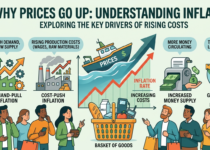
Why Prices Go Up: Understanding Inflation.

How to Save for Business Startups in Nigeria