How Education Contributes to a Stronger Economy
Education is a key component of a robust economy. It provides people with the info, skills, and confidence they need to get into the economic game. A country which has a great education system is able to develop a skilled labor force, produce better businesses, improve productivity, and reduce unemployment.
Education isn’t just about sitting in a classroom and receiving a degree. Also included is the acquisition of practical skills, development of good habits, problem solving, and what you leave the school to apply in day-to-day living and at work. As more people are given access to quality education, the economy as a whole sees growth.
What Role Does Education Play in the Economy?
The economy is fueled by people. We see that workers produce goods and services, businesses hire people into that production, and consumers purchase what is put out. For that to all run smoothly, people must have the right knowledge and skills.
Education puts individuals into many different roles and jobs. A person that gets the right training may put in a better performance and solve problems more easily. As many workers have useful skills, businesses may see growth in productivity, which in turn may contribute to economic growth.
Education also plays a role in how it puts forth how different elements of the economy function. Also, it introduces to them communication, technology, management, science, agriculture, and other very important fields.
Education Creates a Skilled Workforce
Workers Gain Useful Skills
One of the primary ways that education supports the economy is through the development of skilled workers. We see that schools, colleges, universities, and vocational centers play a role in which people acquire skills which, in turn, they apply in various industries.
Education also puts forth teachers, engineers, health workers, technicians, accountants, farmers, programmers, builders, and many more professional roles. These workers are required for businesses and public services to run smoothly.
When employees have the right skills, they do better at their job and, in turn, contribute more to the success of the organization.
Skilled Workers Improve Productivity
Productivity is a measure of what we get out of the resources we have. Also, a very good worker may know how to use the equipment best, organize tasks, and avoid that which is not required.
Higher output, which in turn sees businesses produce a greater amount of goods and services. Also, it enables organizations to save time and make better use of their staff and equipment.
Education Encourages Employment
Education Improves Job Opportunities
Education plays a role in which jobs people are able to get. Many careers require particular skills or training which one has to obtain first.
A person that has the right education and skill set is put in a better position to secure a job as compared to which of may be lacking in these areas. Also, it is true that not all educated people will immediately get a job, but education does offer a better base to enter the workforce.
Education Helps Reduce Unemployment
When people have skills which are useful, they are able to go after a greater variety of jobs. Technical and vocational training is also very helpful as it puts focus on practical skills.
People have at our disposal areas of skill like tailoring, plumbing, electrical work, computer use, catering, welding, farming, and other trades. These skills, in turn, help people into jobs, or they run communities better.
Education Supports Entrepreneurship
Schools Can Build Business Skills
Education also fosters entrepreneurship. In terms of communication, management, production, technology, and problem solving, we see that which, in turn, better equips people to start and run businesses.
Entrepreneurship is key as businesses produce goods and also create jobs.
Education for future business owners includes learning to see problems, come up with solutions, talk to customers, and organize work.
Education Encourages Innovation
Innovation is bringing to the table what is new or an improved way of doing something. Education instills in people the habit of asking questions, thinking through problems, and finding solutions.
A large part of what a good education does is put out new ideas in fields like agriculture, tech, manufacturing, transport, education, and communication. These put forth ideas which, in turn, bring about new products, services, and methods of production.
Education Improves Technology Skills
Workers Can Adapt to New Technology
Technology is transforming how we work. Many companies today are dependent on computers, digital tools, machines, and online systems.
Education in technology issues, which, in turn, enables workers to use tech in day-to-day tasks. As for personnel that have a tech background, they may find it easier to learn new software as work settings transform.
This is true that those which do not adapt to new tech may have difficulty in the changing economy.
Digital Skills Create New Opportunities
Digital education has brought out new opportunities which did not exist before. We see people learning skills like web development, graphic design, digital communication, data analysis, and also a range of other tech-based skills.
These skills, which, in turn, support businesses and also put forth new types of work. Also, they play a role in people’s participation in an economy which is growing ever more so through technology.
Education Helps Improve Living Standards
Education Can Increase Earning Ability
Education, which, in turn, develops skills that employers are looking for in the workforce. Also, those employees which have a better skill set and experience put themselves in a position to go after more specialized roles.
As more people gain in terms of good jobs which they do, families are able to better afford their basics. Also, this improves living standards and which, in turn, supports economic growth.
Educated People Make Better Decisions
Education also puts at people’s disposal greater ability to access information and make informed decisions. Which also sees that people who can read, write, do calculations, and obtain basic info are better equipped for day-to-day responsibilities.
This is true for the individual as well as the community, which, in turn, sees growth as its members are better equipped to take part in social and economic life.
Education is a pillar which supports many economic sectors.
Agriculture
Education for farmers includes learning better planting, storage, processing, and marketing techniques. Also, knowledge which, in turn, empowers them to improve use of available resources and reduce waste.
A more educated labor force in agriculture can see an increase in food production and development of farm-related businesses.
Manufacturing
Manufacturing businesses require employees that are versed in machines, production processes, safety protocols, quality control, and also other technical aspects.
Education and technical training programs are a source of the skills for manufacturing.
Services
The sectors which include are banking, education, transport, communication, hospitality, health care, and professional services.
As of now, many of these areas are dominated by specialists. With improved education, the number of people which may enter into different service sectors grows.
Education Helps Reduce Poverty
Poverty plays a role in economic development, which is when large sections of the population have no chance to better their living conditions.
Education provides individuals with the knowledge and skills which, in turn, helps them in the job market. Also, it may improve access to a wide range of careers and types of employment.
As more individuals gain income from productive work which they do, the family and community see better days.
Education Supports National Development
A country’s growth is a result of many factors which include human capital. Also, a country’s development is a complex issue which people play a large role in.
Teachers shape the minds of tomorrow. Engineers construct our infrastructure. Scientists put forth new ideas. Farmers grow our food. Business owners create jobs. Technicians repair machines and systems. All of these roles require different types of knowledge and training.
This is why education is at the core of national development. Which means a country that puts value in quality education is also, at the same time, developing the people that will, in turn, support its future economy.
The Importance of Quality Education
Access Alone Is Not Enough
It is a fact that people do, in fact, have a right to education; at the same time, the quality of that education also is of great importance. We see that what is needed is quality teachers, relevant material, safe schools, and practical knowledge.
Education should put out into the world students that are ready for what life throws at them instead of just preparing them for tests and paper qualifications.
Practical Skills Matter
Practical skills go hand in hand with academic knowledge. We see that which students gain from the study of communication, teamwork, critical thinking, problem solving, digital skills, and vocational abilities.
These abilities which may be applied in the workplace and in daily life.
Conclusion
Education plays into the strength of our economy in many aspects. We see it in the development of skilled workers, in increased productivity, in terms of employment growth, in the promotion of entrepreneurship, in the put forward of innovation, and in its role of having people adapt to technology.
Also, it supports key sectors like agriculture, manufacturing, and services. Through the provision of useful knowledge and skills, education improves what people can do in the economic field and, in turn, contributes to national development.
For economic growth that is healthy and sustainable, investment in people is key. What we see is that quality education gives individuals the resources they need to develop better careers and to play a greater role in their communities. Also, in this is included not only individual benefit but also education’s role as a strong and progressive economy’s foundation.

The Future of Work Worldwide
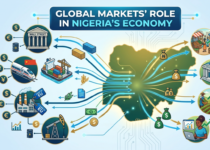
Global Markets’ Role in Nigeria’s Economy.