How Currency Fluctuations Affect Countries
Currency values, which are in a state of change in relation to each other, are what we see in currency fluctuations. These changes play out in the foreign exchange market, which is a place where currencies trade hands constantly at the will of supply, demand, and economic reports. Rates may see a gradual shift over time or a sudden change during times of economic instability.
Exchange rates are a key element in the global economy, which they do to international trade, investment, inflation, and economic stability. As it is with import and export activities, foreign capital flow, and operation of the global financial systems, currencies’ values’ movement plays a role in what businesses, governments, and households do.
This paper reports on what are the main drivers of currency fluctuation and also looks at how changes in exchange rates play out in terms of trade, inflation, investment, employment, government policy, and large-scale economic performance across many countries.
What Causes Currency Fluctuations
In international markets, many economic and financial aspects impact currency values.
Interest Rates and Central Bank Policies
Central banks determine interest rates that, in turn, greatly affect currency demand. We see that higher interest rates usually draw in foreign investors, which in turn do better returns on savings and investments. As foreign demand for a country’s financial assets goes up, its currency tends to strengthen.
Central banks, which in turn run currencies into the ground or prop them up through what they do in monetary policy, which includes money supply control, bond buying, or foreign exchange intervention. Markets, which are very much attuned to word that which comes out on issues of future policy change.
Inflation Differences Between Countries
Countries with low inflation see more stable currencies. When inflation is in check, purchase power is preserved, which in turn makes the currency more attractive to investors and trade partners.
By contrast, at times of high inflation, a currency weakens as goods and services go up in price, which in turn reduces international competitiveness.
Trade Balances
A country which trades more outwards than inwards may see greater demand for its currency, as foreign buyers use it to buy that country’s products and services. This may produce a trade surplus and improved exchange rate.
Countries with large import bases may see their currency fall when there is an increase in demand for foreign currencies.
Foreign Investment Flows
Foreign direct and portfolio investment play a large role in determining exchange rates. We see that investors, which are after business opportunities, stable economies, or profitable financial markets, which in turn increases demand for local currencies.
If investors’ trust leaves and they take their funds out of the country, we may see the currency weaken quickly.
Political Stability and Economic Confidence
Stable political environments and consistent economic policies usually foster strong currencies. In the case of political uncertainty, corruption issues, social unrest, or economic crises, investor confidence goes down, which in turn causes currency depreciation.
Global Events and Market Speculation
Global crises, wars, pandemics, commodity price shocks, and financial markets’ speculation are causes of great currency movement. Traders at times base their decision to buy or sell currencies on what they expect will happen in the economy, which in turn may put more fuel to the fire.
Impact on International Trade
Exchange rate fluctuations play a role in the price and competitiveness of exports and imports.
Strong Currency Effects
When a country’s currency strengthens, import of goods goes down, which in turn makes imported products cheaper for the consumer, which in turn benefits businesses that use imported materials and machinery. This also means that a stronger currency will see an increase in the import of raw materials and machine parts for local industries.
However, export prices go up for foreign buyers. Thus, domestic industries may see a drop in their international competitiveness.
Weak Currency Effects
A weaker currency, which in turn makes exports a more attractive option for foreign customers. We see growth in export-oriented industries.
At the same time, we see that import prices have gone up, which in turn passes the higher costs on to the consumer and business which rely on foreign trade.
Trade Deficits and Surpluses
Exchange rates play a role in which countries see trade deficits or surpluses. A weak currency may cause import reduction and export increase. At the same time, a strong currency may raise import demand, which in turn widens trade deficits.
Global Supply Chain Implications
Modern supply chains are global. We see that currency fluctuations, which in turn raise production costs, play with pricing decisions and also affect multinational companies that operate in many different countries. Businesses are constantly changing which exchange rates they use when they are sourcing materials or selling products worldwide.
Effect on Inflation and Cost of Living
Currency exchange rates play a role in setting prices, which in turn affect household expenses.
Imported Goods and Consumer Prices
When a currency devalues, imported products like electronics, cars, medicine, and industrial materials see an increase in price. Also reports that companies put this increased cost onto consumers through higher product prices.
Also, a strong currency may lower import costs and put a brake on inflation.
Fuel and Food Prices
Fuel and food products are very much at the effect of exchange rate changes, which in turn see many countries import petroleum products, grain, and agricultural inputs. Thus, we see that depreciation of the currency plays a role in the increase of transport and food prices.
This develops, in many cases, in developing economies, which see imported basics to be a large element of what they spend.
Household Purchasing Power
Currency instability may see everyday costs, prices, and services go up and outstrip growth of incomes, thus leaving many homes with difficult choices on maintaining living standards.
In economies which have stable currencies, consumers also see that prices and financial planning become more predictable.
Inflationary Pressure in Different Economies
In developed countries, institutions and economies are more diverse, which in turn allows them to better weather currency shocks. As for developing countries, they are more at the mercy of inflation as a result of currency depreciation because they put out large demand for imports and foreign finance.
Impact on Investment and Financial Markets
Currency exchange rate movements greatly impact investors’ behavior and financial market stability.
Foreign Direct Investment Attractiveness
Stable currency values, which is what we see in stable exchange rates, encourage long-term investment, as businesses prefer a predictable environment in which to operate. Also, we see that excessive fluctuation in the value of the currency may dissuade investors, which in turn may cause them to fear loss from sudden changes in exchange rates.
A weak currency, in some cases, can see more interest from foreign investors, which is as a result of the reduced price of local assets and businesses.
Stock Market Reactions
Financial markets are at times very responsive to changes in currency values. Export-facing companies may do well out of weak currencies, while import-dependent firms may see their operating costs rise.
Sharp currency drops also see large-scale market uncertainty and capital outflows.
Currency Risk for Investors
International investors see that which of their investments do well may, in fact, report losses at the time of conversion back to home currency as a result of fluctuating exchange rates. Even if a foreign investment is profitable, it may still do poorly for the home investor due to currency movement.
Role of Speculative Trading
In the foreign exchange market, which sees investors buy and sell currencies based on what we expect to see in terms of future prices, we have speculation. Although speculation’s role is to improve market liquidity, in large doses it may also increase short-term volatility.
Impact on Economic Growth and Employment
Currency fluctuation plays a role in economic growth trends and labor markets.
Export-Driven Growth
A weak currency can fuel economic growth by improving export competitiveness. In manufacturing, agriculture, and tourism, we may see increased production and more jobs.
Reduced Growth from Instability
Frequent and unexpected changes in currency values may deter business investment and slow economic activity. Businesses may put off expansion plans if the costs and revenues in the future are unknown.
Employment Effects
Export sectors may see an increase in foreign demand, which in turn may bring about job growth as a result of currency devaluation. Also, some industries that import materials for production may have reduced employment if input costs rise greatly.
Long-Term Planning Challenges
Currency instability issues are a challenge for businesses and governments in terms of long-term economic planning. In the case of very volatile exchange rates, budgeting, pricing, debt management, and investment decisions become more difficult.
Impact on Government Policy
Governments and central banks at times react quickly to currency fluctuations.
Central Bank Interventions
Central banks at times will buy and sell currencies in foreign exchange markets to stabilize exchange rates or reduce high volatility.
Interest Rate Adjustments
Rising interest rates tend to strengthen a currency, which in turn attracts investors. At the same time, lower rates may put pressure on the currency to fuel exports and economic growth.
Currency Pegs and Managed Exchange Rates
Some countries keep fixed or managed exchange rates, which they do so to reduce instability. While this may present predictability, it may also require large foreign currency reserves and careful policy coordination.
Foreign Reserve Management
Governments hold foreign exchange reserves, which they use in times of financial stress or trade imbalances. Also, large enough reserves can improve investor confidence.
Trade and Fiscal Policies
Governments also intervene in the market by changing taxes, subsidies, or trade policies, which in turn may correct for currency fluctuations that affect industry and consumers.
Risks and Challenges of Currency Volatility
Excessive exchange rate fluctuation creates many economic risks.
Economic Uncertainty
Rapid changes in the exchange rates create uncertainty for companies, investors, and consumers. Unstable costs and revenues, which in turn may decrease economic confidence.
Debt Repayment Challenges
Many nations and companies are in debt in foreign currencies. As the domestic currency weakens, it becomes more expensive to pay back that debt, which in turn puts more financial stress.
Reduced Investor Confidence
Persistent monetary instability means that investors will put their money into what they see as safer markets. This, in turn, weakens economic growth and reduces access to foreign finance.
Business Planning Difficulties
In international trade, we see that many companies have trouble with pricing, outlying exchange rate changes, and supply chains.
Conclusion
Currency exchange is a basic element of the global economy. We see that exchange rate changes play into trade competitiveness, inflation, investment flows, employment, government policy, and the price of everyday products.
While, in some cases, weak currencies do support exports and economic growth, very high volatility brings about inflation, uncertainty, and financial instability. As for strong currencies, which may lower import prices, they also at the same time may diminish export competitiveness.
For that which is true, states try to achieve equilibrium between exchange rate flexibility and economic stability. Effective money policy, good economic management, and investor confidence also play very much into the health of the currency we have and for long-term economic growth.
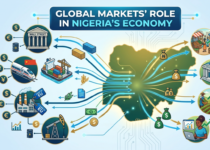
Global Markets’ Role in Nigeria’s Economy.

The Importance of Digital Skills in Today’s Economy