Digital Economy: How the Internet Is Changing Money
The Evolution of Money in the Digital Age
In the past few decades, people’s relationship with money has transformed. Before, that which was money was what you held in your hand—coins, paper bills, or perhaps a check in a wallet. Now, much of it is simply numbers on a screen. This shift was not instant. It is a result of the internet’s rapid growth, which in turn has changed how we earn, spend, save, and even think of money.
Understanding the Digital Economy
In the digital age, we see a shift to economic activities which are based in large part on digital technologies, mainly the internet. This is a much broader field than just online shopping or banking, as it also includes things like freelance work, digital services, virtual goods, and online platforms. In this new setting, money does not primarily function in a physical sense. Instead, it flows fast and almost imperceptibly through networks, which in turn connect people and businesses all over the world.
Faster Digital Transactions
In the age of the internet, we see that the speed of transactions is a prominent feature. In the past, sending money took days, at times up to weeks, over large distances. Today, we see nearly immediate payment, which can be done in seconds. From buying a digital service from your home to transferring money to another country, the process is what one may call instantaneous. What we are seeing is that this speed has helped in the expansion of global business for companies and also how individual consumers have broken down geographical barriers in the economic world.
The Growth of Online Shopping
The growth of online shopping also plays a key role in how money is moving around. We see that people don’t have to go to brick-and-mortar stores to get what they want. With a smartphone or computer, they may peruse products, compare prices, and buy from the comfort of anywhere. This convenience, which in turn changes consumer behavior, makes them shop more often, at times impulsively. Also, it has made room for small businesses to reach larger audiences, which they didn’t have access to before via a physical store.
New Ways to Earn Money Online
In the digital economy, we see the growth of online work. The internet has brought in novel ways for people to make money which were not the case before. Freelancers put out their services to a global audience, and at the same time, content creators are making income through digital platforms. What we are seeing is a blurring of the lines between what was traditional employment and independent work. For many, the concept of a set workplace or a single employer is giving way to more flexible arrangements.
The Role of Digital Platforms
Digital platforms have become key actors in this new economy. We see them as go-betweens, which put buyers in touch with sellers, service providers with their clients, or which bring creators and their audiences together. Also, they facilitate payment, which in turn makes transactions smoother and more secure. But they also raise issues related to control and fairness. As they operate at a large scale, these platforms may play a role in setting prices and determining visibility, which in turn may also define the terms of participation for which they are used.
The Rise of Digital Payments
Money as a concept has also changed. What we see as currency is no longer just physical cash in many cases. We see a great use of digital wallets, online payment systems, and other electronic methods. These tools, which allow for the storage and use of money without physical interaction, have become very common. This shift has made transactions easier and more convenient for the consumer but also brings in issues like the need for strong security measures to protect against fraud and cyberattacks.
Virtual Goods and Digital Value
In the digital economy, we see another interesting trend, which is the growth of virtual products and services. What we are putting money toward is often a digital-only item, like in-game purchases, digital art, or online content subscriptions. At first, these may seem out of the ordinary, but they are a part of a larger shift in what we consider valuable. In the digital space, value doesn’t always equate to physical things; it may be in the form of an experience, access, or convenience.
Access to Financial Information Online
The internet also is a factor in the easy spread of information related to money. We see that people are able to access and share what is new in terms of trends, tools, or opportunities within the digital economy at great speed. Also, we have more access, which in turn empowers individuals to make better-informed decisions. At the same time, we see that false information also spreads just as fast as real information, which is why it is very important for users to take a critical approach to what they see online.
How Small Businesses Benefit from the Digital Economy
Small businesses in the digital age are seeing great success. With few resources at their disposal, they are using online tools to market products, run their operations, and interact with customers. Social media, in particular, has become a great platform for companies to build relationships and present what they have to offer. Also, what we are seeing is that digital has lowered the barriers to entry, which in turn allows more people to get in on the economic action and pursue their business dreams.
The Digital Divide and Economic Inequality
However, in many cases, the digital economy presents issues. A key issue is that of inequality. We see that not all people have equal access to the internet or the skills which run digital technologies. This gap in access creates, for some, a disadvantage, which in turn limits their full participation in what is the modern economy. We must see to it that we improve digital access and literacy, which in turn will do much to promote the broad-based adoption of what the digital economy has to offer.
Privacy and Data Protection
Privacy is a very important issue. As we see more financial transactions take place online, personal data has become a valuable asset. Companies which collect and use this information report that it is to improve services or to target ads. While this improves the user experience, it also brings up issues of how information is stored, shared, and protected. We see an ongoing issue in the digital age of convenience vs. privacy.
The Government’s Role in the Digital Economy
Governments today have a more complex role in the digital economy. What we had was a regulatory and tax structure which was put in place for physical transactions and local businesses. But with digital, it’s a different ball game—we see activities that cross borders and are global in scale. That, in turn, makes it hard to use present rules which we have, and we require new solutions to promote fairness and accountability. As they adapt to this new environment, governments must also support innovation and growth.
The Importance of Digital Skills
Education in the present time is of great importance, as is skills development. As the digital economy grows, which in turn sees an increase in the demand for digital skills, we see that people must familiarize themselves with online tools, protect their data, and adapt to change in the work setting. Lifelong learning is not a choice but a requirement to stay relevant in a very dynamic world.
Benefits of the Digital Economy
Despite the issues the digital economy presents, it still brings many benefits. It has seen growth in how people connect, team up, and create value in ways in which traditional models did not apply. Also, it has grown access to markets and resources, which in turn sees individuals and businesses reach out beyond what was available to them before. For many, it is a chance to play a greater role in economic life and to also put forward new ideas.
How the Internet Has Changed Money
In the past, the internet did not only change the way money moves—it also changed the role money plays in our lives. The economy we see today is more dynamic, more interconnected, and, at the same time, faster-paced. Although physical cash is still present, it is not at the core of economic activity like it used to be. Instead, what we see is money integrated into a larger digital system that is still very much in the process of transformation.
The Future of Money in a Digital World
Comprehending this change is key for all of us as we try to make our way in today’s world. The digital economy is a present reality; it is a part of day-to-day life. From how we shop and work to how we save and spend, it is at the core of what we do. As tech continues to advance, the relationship between the internet and money will become even stronger, in ways which are, at present, still to play out.
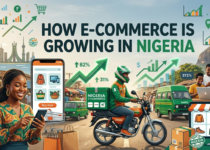
How E-commerce Is Growing in Nigeria

The Role of Education in Career Growth